beamjockey: Drawing of Bill of the Heterodyne Boys by Phil Foglio. (Default)
In his column on Tor.com, James Nicoll recently wrote:

"While hardly the first space patrol novel, Heinlein’s coming-of-age tale may be one of the best known."

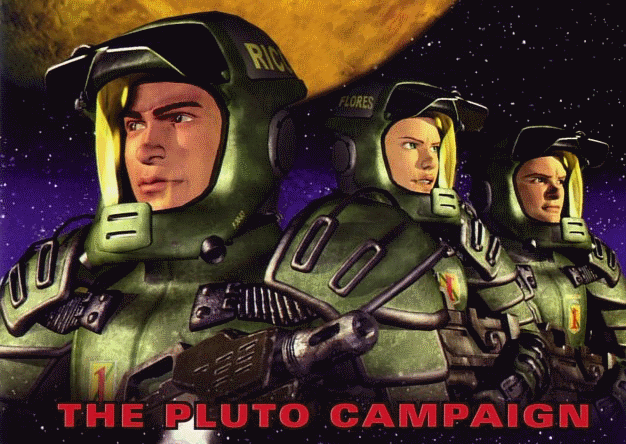
Indeed, Space Cadet is, as they say over on another Web site, the Trope-Namer.

As they began production of what would become their multimedia juggernaut, the creators of Tom Corbett, Space Cadet paid Heinlein for the broadcast rights to his novel. He would not be involved in the shows, nor would his name appear in the credits, nor would their characters and plots bear more than a passing resemblance to his story, but he received fifty dollars a week.

The TV show was prominent, though not first, among a wave of US TV space adventures in the early 1950s. "Space Cadet" entered the language, somewhat as a synechdoche for all these shows and their characters.

This is my favorite thing to make an N-gram plot of. The phrase "Space Cadet" peaks in frequency in 1952 at 25.5 per billion words, declining as the craze ebbs and the shows are canceled. By 1970 it has sunk to 1.65 per billion words, even though the nonfictional Space Age is well underway.

But wait! In the 1980s, "Space Cadet" begins to climb in frequency again! A new generation has begun to employ it. By 2010, it is back to half its 1952 frequency.

What gives? I credit Moon Unit Zappa. In her 1982 novelty record "Valley Girl," she says, "Like, my mother is, like, a TOTAL space cadet!"

Ms. Zappa revived the phrase with a new meaning: "a flaky, lightheaded, or forgetful person," says the Merriam-Webster dictionary site. Nowadays this is nearly always the intended meaning, with "student in an academy for officers in a spacegoing military organization" a distant second.

It would not surprise me much if the "lightheaded person" meaning arose, but with low frequency, in the years before 1982. But I have not investigated this conjecture. I am pretty confident that the post-1982 boost in "Space Cadet" popularity is due to the Zappa Family Singers.

Meanwhile, a lot of people have been wondering when the United States Space Force is going to establish its own service academy. If and when this occurs, we already know one public-image problem its students are going to be facing.
beamjockey: Drawing of Bill of the Heterodyne Boys by Phil Foglio. (Default)
Here comes Capricon 37, this year again in the Westin Chicago North Shore Hotel in Wheeling, Illinois. It begins Thursday, 16 February, and runs through Sunday, 19 February. I'm participating in a number of program items.

Thursday, February 16

Conventions in the Social Media Age
Birch A (1), 3:30pm - 5pm
Track: Fan Interest

Liz Gilio (moderator), Meg Frank, William Frank, Neal F. Litherland, Bill Higgins

Social Media has allowed us unprecedented access to each other. While in many ways this is a good thing, it also allows anonymity and negativity to enter what many fans consider safe spaces. Has online fandom changed cons? For better or for worse? Has social media filled a void that cons used to fill? Are cons even necessary any more?

Friday, February 17

What Keeps You in Fandom?
Willow (1), 1pm - 2:30pm
Track: Fan Interest
Division: Programming
Dexter Fabi (moderator), Val Hoski, Jessica Guggenheim, Jason Betts, Bill Higgins

Every year you go to the same conventions, or you keep looking for that one author's books, or you dress as that character in the show you like.... what keeps your fandom alive? And what keeps you participating in your fandom at large?

Introduction to Classic Movies
Willow (1), 8:30pm - 10pm
Track: Media
Division: Programming
Dexter Fabi (moderator), Frank Salvatini, Bill Higgins

What classic SF movies are MUST see, and why?

Saturday, February 18

Return to Jupiter: NASA's Juno Mission
Botanic Garden Ballroom A (1), 10am - 11:30am
Track: Science
Division: Programming
Bill Higgins (a solo talk)

Last summer, a new spacecraft arrived at Jupiter. Juno's mission is to orbit the giant planet, studying its powerful magnetic field, intense radiation belts, and the intricate interplay of particles and energies surging through nearby space. Bill Higgins reviews Juno's role in gathering more clues to the formation and evolution of Jupiter.


Writing "Real" Aliens
Botanic Garden Ballroom B (1), 11:30am - 1pm
Track: Writing
Division: Programming
Richard Garfinkle (moderator), Phyllis Eisenstein, Martin L. Shoemaker, Michael Coorlim, Bill Higgins, Natalie Silk

Why do so many aliens look or sound like humans with prosthetics on their faces? Why does human sexual morphism/beauty codes carry across all species? Why aren't there more bugs and blobs?

Kids Plan a Mission to Mars
Elm (1), 4pm - 5:30pm
Track: Kids
Division: Programming
Jason Palmer, Bill Higgins, Lisa Garrison

What would YOU do if you were planning a mission to Mars? What things do you think would be needed?
beamjockey: Drawing of Bill of the Heterodyne Boys by Phil Foglio. (Default)
Once again, I'm heading to Novi, Michigan for the 2017 iteration of Detroit fandom's venerable convention Confusion-- this year named "Friendship is Confusion." I'm participating in three program events. Say hello if you encounter me there.

Fan Guest of Honor Induction
Saturday 1 PM
St. Clair Room

The Fan Guest of Honour Introduction and Induction is a traditional ConFusion event, wherein any attending Fan GoHs of years past welcome the new Fan GoH to the club.

(I was Moonbase Confusion's Fan Guest of Honor in 2007, the year after Chuck Firment and the year before The Roving Pirate Party. This year we'll be inducting Mark Oshiro.)


Return to Jupiter: NASA's Juno Mission
Saturday noon
Manitou Room

Last summer, a new spacecraft arrived at Jupiter. Juno's mission is to orbit the giant planet, studying its powerful magnetic field, its intense radiation belts, and the intricate interplay of particles and energies surging through nearby space. Bill Higgins reviews Juno's role in gathering more clues to the formation and evolution of Jupiter.

Pimp Your Mars Rover
Saturday 5 PM
Manitou Room

What would a vehicle need to traverse the unforgiving surface of Mars? A perfect panel for those interested in engineering the next buggy.
Panelists: Karen Burnham (moderator), Martin L. Shoemaker, Courtney Schafer, Bill Higgins
beamjockey: Drawing of Bill of the Heterodyne Boys by Phil Foglio. (Default)
It's nearly time for the 74th World Science Fiction Convention, MidAmeriCon II, in Kansas City, Missouri. It runs from the 17th to the 21st of August at the Kansas City Convention Center in Kansas City, Missouri. Here are program items in which I'm participating. "Kansas City, here I come!"

WSH HH&O 1090x960

Jungian Mindscapes and Clement's Iceworld

Thursday 10:00 - 11:00, 2201 (Academic) (Kansas City Convention Center)

[I'm the second speaker in this academic session of two short talks.]

“The Red One” and Enduring Archetypes of Science Fiction’s First Golden Age:
The Jungian Mindscapes Campbell Inherited from the Writers of the Fin de Siècle

Charles Von Nordheim

The Search for Saar: Looking Back at Hal Clement's Iceworld with 21st-Century Science
William S. Higgins
Fermi National Accelerator Laboratory

Some scientific aspects of Hal Clement's 1951 novel Iceworld are notable 65 years later. First, in 1951 not one exoplanet was known. Clement would live to see an abundance of new planets circling distant stars. Furthermore, rather than seeking Earth-like planets, one may search for worlds Clement's sulfur-breathing aliens might inhabit comfortably. The planet-hunting Kepler spacecraft has identified at least one planet, Kepler 42c, where conditions approximate those of the imaginary world Saar. Second, in detail unusual for SF of its time, Iceworld explores a planet with remotely-operated spacecraft, anticipating the methods of the coming Space Age.

Kaffeeklatsch: Bill Higgins

Thursday 12:00 - 13:00, 2211 (KKs) (Kansas City Convention Center)

An hour of conversation with a few people who wish to converse with me. Attendees must sign up in advance Wednesday afternoon for the limited seating. Signup instructions are here. (I doubt actual coffee will be served.)

Other kaffeklatsch hosts in the same room at the same time—at different tables—will be Kathleen Ann Goonan,  Brianna Spacekat Wu, and Christopher McKitterick.

Edison's Concrete Piano

Thursday 18:00 - 19:00, 2206 (Kansas City Convention Center)

Bill Higgins (Moderator), Dr. Jordin Kare, Allan Dyen-Shapiro, Howard Davidson,  andyvanoverberghe

Even the greatest minds have some pretty strange ideas. In 1911, Edison decided to create a concrete piano. What other great, or extremely bizarre ideas have found their way to the US patent office? A look at the oddities that people have imagined.

Note: This panel has moved forward one hour from the original timeslot.

Where Science Fails

Friday 15:00 - 16:00, 2502B (Kansas City Convention Center)

Brother Guy Consolmagno SJ (Moderator), Bill Higgins, Anna Kashina,  Dr Helen Pennington, Mr. Donald Douglas Fratz

Although scientists are supposed to follow the scientific method, sometimes that allow their human side to get ahead of them. What caused the crisis of replication in social psychology, the false alarm on cosmic inflation detection, or the announcement of cold fusion?  How can these errors be avoided, and how do they damage the reputation of science?

Ask a Scientist

Saturday 15:00 - 16:00, 2210 (Kansas City Convention Center)

Mx Rachael Acks, Bill Higgins (Moderator), Dr. Claire McCague, Dr. Lawrence M. Schoen, Dr. Geoffrey A. Landis

Do you have a pressing question about the earth's warming, worm holes, advances in communication technology, cloning? A panel of scientists in varied areas of expertise are here to answer your scientific queries. Answers will be timed out at five minutes each, so don't ask for a detailed explanation of General Relativity! Please keep questions brief and specific.

Fizz and Fuse, the Reactor Brothers

Saturday 16:00 - 17:00, 3501H (Kansas City Convention Center)

Dr. Jordin Kare, Bill Higgins

In this humorous ad-lib chat, Jordin Kare and Bill Higgins diagnose people's spaceship (and other SF) problems in the style of "Car Talk."

Playback from Pluto

Sunday 15:00 - 16:00, 2502B (Kansas City Convention Center)

Bill Higgins

There's a treasure at the edge of the Solar System, a data recorder aboard the New Horizons spacecraft, sending Earth several gigabytes acquired during last summer's flyby of Pluto. The excitement of the initial encounter still lingers. Downlinks in recent months continue to illuminate the mysteries of Pluto, and 2019 brings us all new data. What will we learn?

beamjockey: Drawing of Bill of the Heterodyne Boys by Phil Foglio. (Default)
I'm attending Musecon 6 this weekend in the Westin Chicago Northwest hotel in Itasca, Illinois.

I'm on the program for a couple of items.

Return to Jupiter: NASA's Juno Mission
Friday 9:00 PM - 10:15 PM
Room: Carlyle

This summer, a new spacecraft arrived at Jupiter. Juno's mission is to orbit the giant planet, studying its powerful magnetic field, its intense radiation belts, and the intricate interplay of particles and energies surging through nearby space. Bill Higgins reviews Juno's role in gathering more clues to the formation and evolution of Jupiter.

MuseCon's Eternal Ukulele Summit - 2016 Edition
Sunday 1:30 PM - 2:45 PM
Room: Trafalgar

Lisa Golladay, Bill Higgins

We hold these truths to be self-evident: That your life with a uke is better than your life without one. That you can bring a uke or borrow a loaner. That all players are welcome at any skill level, including the ones who haven't started yet. And that anyone who thinks a blues progression in C is "too easy" isn't trying hard enough (we can fix that).
beamjockey: Drawing of Bill of the Heterodyne Boys by Phil Foglio. (Default)
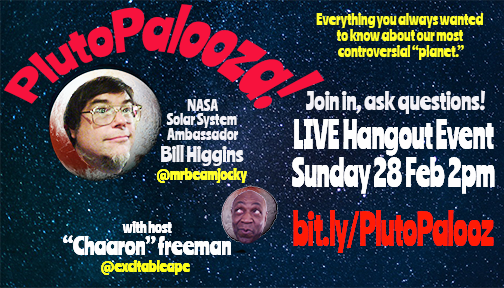
Aaron Freeman and I will be conversing by means of Google Hangout this coming Sunday, 28 February, at 2 PM Central Standard Time. The topic is Pluto, recently explored by NASA's New Horizons mission. If that sounds like fun, please tune in. Send your questions along.

In its flyby last July, as you probably recall, New Horizons gathered so much data about Pluto, its big moon Charon, four smaller moons, and Pluto's atmosphere that it's taken many months to play back-- and even now, not all the data have yet been transmitted to Earth. Since new results are announced frequently, there's always something new to say.


So Sunday, we're holding our own personal Plutopalooza, and Aaron has renamed himself "Chaaron Freeman" in honor of the big gray satellite.

To join in, click this invitation link.

It leads to a page that says "You need an invitation to view this event," with a button that says "Request an invitation." Click that button, and you reach a page that says "You requested an invitation to this event. You will receive an invitation when the event organizer approves your request." At this point, I presume, some combination of Google's robots and Aaron himself will work unspecified magic. Come Sunday at 2 PM Central, fire up Google Hangout.

I suspect the event will be recorded, should you choose to review it later. But on such details, I am, like tiny particles suspended in Pluto's tenuous atmosphere, hazy.


During the encounter in July, I witnessed the excitement at New Horizons' home base, the Johns Hopkins University's Applied Physics Laboratory, and assisted APL with some education activities. In my capacity as a NASA Solar System Ambassador volunteer, I've been telling people about the mission for months.

Aaron Freeman is presently Artist-in-Residence at the Chicago Council on Science and Technology. His job: communicating about science in his offbeat, witty way. You can find his work on the Web, on Twitter, and on YouTube.

Aaron describes himself as "funnyman, science blogger... improv actor, auctioneer, MC, host, moderator" and a bunch more nouns. He entertains and educates, and has even left his mark in Chicago's history books. Years ago, I was a guest several times on his TV and radio talk shows. Recently we reconnected when the Chicago Council on Science and Technology invited me to give a talk in their Speakeasy series at Geek Bar. Aaron turned up, and it was a delight to see him again.

Long story short (skipping past this remarkable thing), we hatched a plot to do a Hangout next Sunday. Can't wait!
beamjockey: Drawing of Bill of the Heterodyne Boys by Phil Foglio. (Default)
Over on the Vatican Observatory Foundation blog: On the Road to Pluto
beamjockey: Drawing of Bill of the Heterodyne Boys by Phil Foglio. (Default)
Tomorrow, it begins.

I will get in a car and drive various places. On Sunday, I expect to arrive in Laurel, Maryland.


I saw Neptune long ago and I am very glad to have lived long enough to see Pluto explored by a spacecraft.

Over time, I hope to tell a lot of people about it. People at Musecon, Worldcon, and Windycon, to begin with.

See you on the far side.

beamjockey: Drawing of Bill of the Heterodyne Boys by Phil Foglio. (Default)
Just ten days away from Pluto, the New Horizons spacecraft had an "anomaly" yesterday and went into "safe-mode." It switched control to its backup computer and tried to establish contact with Earth.

This made a lot of us anxious, despite assurances that the spacecraft was probably fine.

NASA has announced that recovery is going well and New Horizons "remains on track for its July 14 flyby of Pluto:"
Preparations are ongoing to resume the originally planned science operations on July 7 and to conduct the entire close flyby sequence as planned. The mission science team and principal investigator have concluded that the science observations lost during the anomaly recovery do not affect any primary objectives of the mission, with a minimal effect on lesser objectives.
Nothing like a little suspense to make a flyby more exciting. Time to get some sleep.
beamjockey: Drawing of Bill of the Heterodyne Boys by Phil Foglio. (Default)
Over on Twitter today Dr. Katie Mack (@AstroKatie), astrophysicist at Melbourne University, was waxing enthusiastic about the New Horizons Pluto spacecraft. I (@MrBeamjockey) responded.

beamjockey: Drawing of Bill of the Heterodyne Boys by Phil Foglio. (Default)
In an ongoing parade of fiftieth anniversaries of events that deeply impressed me as a youth, let's congratulate Alexei Leonov, Russian painter, retired general, and legendary cosmonaut.

On 18 March 1965, Leonov exited the Voshkod 2 capsule through an inflated airlock, floating in space for 12 minutes.


Painting by General Alexei Leonov of the Voshkod 2 spacewalk.


Here are the first-person accounts of Pavel Belayev and Alexei Leonov as published in Life's 14 May 1965 issue-- sanitized to downplay the worrisome difficulty of returning to the Vostok capsule. Leonov's suit wouldn't fit in the airlock; he reduced the suit's pressure to a hazardous level, risking an attack of "the bends," in order to get it flexible enough to squeeze in.

Working outside a spacecraft, in a suit, had often been portrayed in books and films. I was thrilled to know that it was happening in reality. Truly, we were living in the Space Age. And spacewalks have continued since that day. Спасибо, General Leonov!
beamjockey: Drawing of Bill of the Heterodyne Boys by Phil Foglio. (Default)
Quoting from an announcement from Sasquan, the 73rd World Science Fiction Convention, to be held this August in Spokane, Washington:

From: Marah Searle-Kovacevic
Subject: Announcing new Special Guest!
Date: March 14, 2015 5:07:42 PM CDT

We are proud to announce that NASA Astronaut Dr. Kjell Lindgren is a Special Guest of Sasquan!

Dr. Lindgren will be participating in Sasquan while serving as a flight engineer on the International Space Station during NASA Expeditions 44 and 45. Yes, for the first time in Worldcon history, we will be in direct communication with a member of our community - out of this world!


[Full announcement here.]

Marah Searle-Kovacevic

Hospitality Division Head, Sasquan
Social Media Head, Sasquan

Astronaut Kjell Lindgren


As one of the Usual Suspects where Worldcon space programming is concerned, I welcome Dr. Lindgren to the conversation. May he find his participation in our 76-year-long tradition as rewarding as we do!
beamjockey: Drawing of Bill of the Heterodyne Boys by Phil Foglio. (Default)
As an eyewitness to the Philae lander's final moments of operation, the incomparable Emily Lakdawalla writes:
From our position behind the glass, Steven, Chris and I watched the engineers as they, in turn, watched a set of graphs on their screens — graphs that were declining steadily. Shortly after the motion was commanded, the main bus voltage plunged.
The last place I expected to spot a bus-plunge story was on the surface of a comet nucleus.
beamjockey: Drawing of Bill of the Heterodyne Boys by Phil Foglio. (Default)
It's been twenty-five years this week since Voyager 2 performed the first-- and, so far, only-- flyby of the planet Neptune.

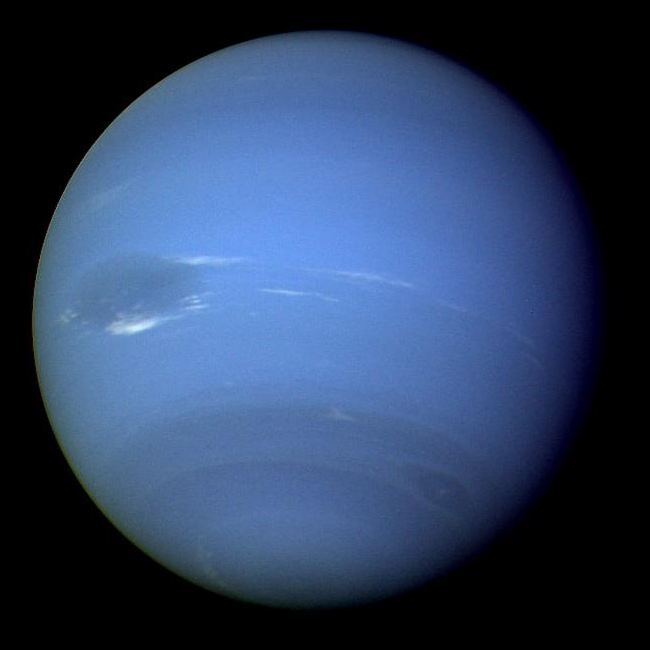
Neptune as seen by Voyager 2
Neptune, with Great Dark Spot and Lesser Dark Spot.

That week I was in Pasadena, playing journalist for a very peculiar news service. It was one of the greatest adventures of my life. Shortly after the encounter, I described my Neptune week in an article entitled I Was a 900-Number Bimbo from Outer Space "Phone Call from a Turquoise Giant."

Neptune encounter trajectory
Diagram of Voyager 2's Neptune and Triton flyby trajectory.

The entire article is long, but I'll give you a few excerpts in the voice of 1989's William S. Higgins.

I'd convinced the people running the National Space Society's Dial-A-Shuttle service that I could absorb NASA's scientific briefings and (quickly!) create clear and concise summaries for the benefit of eager space enthusiasts. I suppose I sounded convincing, because they added me to their team.
Every time a Shuttle mission lifts off (unless it's classified), a team of NSS announcers is ready at the Johnson Space Center in Houston to keep the phone lines hot with information. When there is space-to-ground chatter, callers can hear it live. When astronauts are asleep or busy, or the spacecraft is out of tracking range, Dial-A-Shuttle plays a variety of short taped features which explain aspects of the mission or report on its latest progress. The announcer breaks in every now and then to identify Dial-A-Shuttle, plug NSS, or provide live commentary. Dial-A-Shuttle has been going since STS-7, and has developed a following among space enthusiasts who rely on (900)909-NASA for fresher information and more detail than other news media give. It made sense to try covering the Neptune encounter. But, of course, there are differences. Voyager has no "voice," so there would be no live audio coming from the spacecraft. On the other hand, we could expect much of scientific novelty to be pouring down the data stream in the three days we planned to operate. It's the nature of a flyby mission to report a lot in a short time, so we could provide a service by telling callers about the latest results in the "quick look" science.

Read more about Neptune... )
This first appeared in an NSS chapter publication called Spacewatch. It was reprinted in 2011. To celebrate the first Neptunian year since its 1846 discovery, Steven H Silver published an all-Neptune issue of his fanzine Argentus, which included my Turquoise Giant piece.
beamjockey: Drawing of Bill of the Heterodyne Boys by Phil Foglio. (Default)
Frederick I. Ordway III has passed away. My condolences to his family and friends. I met him a few times, and was always impressed with his efforts to share his considerable knowledge.

He was a prolific author of books and articles on spaceflight and its history. Among his articles, my favorite is "2001: A Space Odyssey in Retrospect," p. 47-105 in the 1982 book Science Fiction and Space Futures, edited by Eugene M. Emme. This is a memoir of his work on the epic movie, chiefly concerned with wrangling its science and technology.

As I have previously written:
[Arthur] Clarke urged Kubrick to hire Ordway and his artist pal Harry Lange, and soon they were moving to England.

Ordway served as jack-of-all-space on the research and design of all the sets, models, etc. "I wasn't an expert on hibernation, but I knew who was. I wasn't an expert on food in space, but I knew people who were." He traveled around to various companies and universities, and got expert advice about future possibilities in the technologies the film would portray. [...]

"Everything had to work. We didn't know where Stanley would point his camera. It could be anywhere on the set." For this reason, every button and display in the spacecraft has a plausible function, every bump and knob on the spacesuits has a reason for its appearance.

One can hear Fred Ordway speak in a number of clips on Youtube.

"Science on Screen" talk following a showing of 2001 at the Belcourt Theatre in Nashville, Tennessee in March 2014.

From SpacePod, a 2010 three-part interview about The Rocket Team, Ordway's influential book with Mitchell Sharpe. It's about the German engineers who developed the V-2 missile during World War II, and went on to build ballistic missiles for the U.S. Army and Saturn Vs for NASA:

Part 1
Part 2
Part 3

Ordway on the history of the National Space Society. He was a charter member of its ancestor, the National Space Institute, and served on NSS's Board of Governors.
beamjockey: Drawing of Bill of the Heterodyne Boys by Phil Foglio. (Default)
I'll be at Capricon 34 this weekend in Wheeling, Illinois, doing a few panels and a talk.

Time Travel without Technology
- Friday, 02-07-2014 - 7:00 pm to 8:15 pm - Willow

While most time travel seems to involve a technological breakthrough, sometimes, as with Matheson’s Bid Time Return or Vonnegut’s Slaughterhouse-Five, characters manage to move through time either through force of will or natural phenomenon. How is this time travel different from the more traditional type?
Walt Boyes (M), Roland J. Green, Bill Higgins, Ken Hite, Matt Mitrovich

By the Light of the Chinese Moon
- Saturday, 02-08-2014 - 10:00 am to 11:15 am - Botanic Garden B

On December 14, China became the third country, and the first in 37 years, to soft land on the Moon. Is this the start of a new space race or has the US conceded the Moon to China? Will other countries join them?
Dermot Dobson (M), Bill Higgins, Jeffrey Liss, Jim Plaxco, Henry Spencer

Weird Patents
- Saturday, 02-08-2014 - 11:30 am to 12:45 pm - Botanic Garden A
A look at some of the weird ideas for which people have filed, and received patents.
Dermot Dobson, Bill Higgins, Ruth Pe Palileo (M)

Vandals of the Void: Damaging Meteorites from Chelyabinsk to Chicago
- Saturday, 02-08-2014 - 4:00 pm to 5:15 pm - Botanic Garden A

A window-shattering shock wave injured 1100 Russians and startled the world one year ago. Meteoric violence is rare, but it can be devastating-and meteorites have assaulted Chicagoland at least twice. Bill Higgins reviews the Chelyabinsk blast, reveals our local impacts.
beamjockey: Drawing of Bill of the Heterodyne Boys by Phil Foglio. (Default)
I wrote a comment on [livejournal.com profile] wcg's blog I thought might be worth sharing here.

He was talking about software called Astrogator, whose manufacturer made the following claim:

In 1953, Robert A. Heinlein published a book named Starman Jones. Aside from being one of Heinlein's better juvenile novels, it coined the word astrogator, meaning a person who navigates a spaceship.

This did not ring true for me; I had the impression it was a pretty standard word in Golden Age stories. A bit of googling and n-gram plotting turns up the 1938 story "The Degenerates" by John Russell Fearn:
We took off right on time two days later, and it was certainly a joy to be the chief astrogator of the Stardust.
Willy Ley mentions "astrogator" in the first version of Rockets, 1944, connecting it to the astronomer R. S. Richardson. Now Richardson wrote lots of science articles for Astounding Science Fiction in those days, so I wouldn't be surprised if we found him using the word now and then.

I can push "astrogation" even further back. David Lasser, an editor working for Hugo Gernsback on Science Wonder Stories and other SF magazines, joined with other writers and enthusiasts to found the American Interplanetary Society, from which the AIAA is descended. And in 1931 he published one of the first American nonfiction books about the new science of spaceflight, Conquest of Space.
Just as two-dimensional navigation on the earth's surface gave way to avigation* when men attempted to travel through the air, so in interplanetary travel we must develop an exact science of three-dimensional astrogation through the heavens.
Okay, having demonstrated that I can find multiple citations predating Starman Jones, now I will peek at the answer in the back of the book: the OED SF jargon site.** Yup, their earliest citations for both "astrogation" and "astrogator" point to Lasser's book. Guess I missed the latter; Google Books failed to detect its presence.

Heinlein's Starman Jones does have the virtue of being about an astrogator, and its control-room scenes are most memorable. But "astrogator" was a venerable word, by SF standards, by the time this novel appeared.


* No, Mr. Lasser, actually it didn't; most aviators wound up still calling it "navigation." So did most astronauts.

** Basis for the book Brave New Words: The Oxford Dictionary of Science Fiction, edited by Jeff Prucher.
beamjockey: Drawing of Bill of the Heterodyne Boys by Phil Foglio. (Default)
I'm back in the U.S.A. To my delight, the Lufthansa flight home had an episode of Raumpatrouille – Die phantastischen Abenteuer des Raumschiffes Orion on its video jukebox. Though my feeble German skills are wholly inadequate to follow actors speaking rapid, colloquial German, it was nonetheless interesting to watch episode 1, "Angriff aus dem All" (Attack from Space). The set designs are terrific, and the special effects reasonably effective.

What really sold me on this show was the way it livened up a simple "two spacemen talking in a bar" scene. The bar's window offers a view of the giant fish cavorting above the underwater city-- nice touch. Then, unexpectedly, THIS happens:


Friends, the future is going to be different.

Anyway, it's good to be home.

Next up: Windycon this weekend. Forty, and I've attended thirty-seven of them. Wow.

Colonizing Space
Saturday, - 12:00 pm to 1:00 pm - Jr Ballroom A

Will space travel ever be safe enough and cheap enough to really colonize other planets? Can a moon or Mars colony really work? Will space colonization be government sponsored or private citizens? What happens if we can’t leave Earth?

Steve Collins
Phyllis Eisenstein
Bill Higgins (M)
Jim Plaxco
Catherine Shaffer


Gravity: Film v. Science
Saturday, - 3:00 pm to 4:00 pm - Jr Ballroom A

The Alfonso Cuaron film Gravity certainly looks beautiful and makes full use of 3D technology, but how accurate is it? Cuaron has admitted that scientific accuracy was allowed to float out the window for the needs of the story, but Astronaut Mike Massimino has praised the film and Neil de Grasse Tyson has tweeted about its inaccuracies.  Our team of technogeeks dissect, celebrate, and go fanboy over the film.

Steve Collins (M)
Bill Higgins
Robert J. Trembley
[This should be a hoot! Beware, there will be SPOILERS at this panel.]

The Future of Private Space Exploration
Sunday, - 10:00 am to 11:00 am - Lilac A

Now that NASA is out of the space business private developers are stepping in. Can private space exploration really give us the future sf predicts? How can we help get there?

Bill Higgins
Ross Martinek
Jim Plaxco
W. A. (Bill) Thomasson (M)

Vandals of the Void: Damaging Meteorites from Chelyabinsk to Chicago
Sunday, - 11:00 am to 12:00 pm - Jr Ballroom B

A window-shattering shock wave injured 1100 Russians and startled the world a few months ago. Meteoric violence is rare, but it can be devastating-and meteorites have assaulted Chicagoland at least twice. Bill Higgins reviews the Chelyabinsk blast, reveals our local impacts.

Bill Higgins
beamjockey: Drawing of Bill of the Heterodyne Boys by Phil Foglio. (Default)
Gravity is really good. But.

If you are the slightest bit inclined to see Europa Report, which has just come out on DVD this week in the U.S., try to see it before you watch Gravity. Like the newer film, it works hard to depict astronauts in a realistic fashion-- in certain ways, its astronauts behave more believably than Gravity's-- making very good use of its limited budget.

Europa Report is a decent hard-SF found-footage film that is considerably better than I'd expected. It deserves to be appreciated on its own merits.

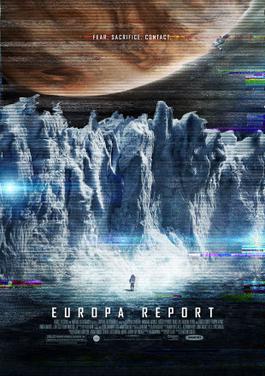
Poster for movie EUROPA REPORT


If you watch the big-budget major-studio special-effects extravaganza first, your appreciation of the small-budget independent film may well be threatened. Already Gravity's box-office receipts have surpassed those of Europa Report by a factor of more than eight hundred.

ER is a noble attempt to make a hard-science-fiction "space suit film." If at all possible, it should be an appetizer to Gravity's feast. See it first.
beamjockey: Drawing of Bill of the Heterodyne Boys by Phil Foglio. (Default)
Asteroid 4942 has been named Munroe, after Randall Munroe, the cartoonist who draws XKCD. Here is its entry in the Small Bodies Database.
The first thing I did was try to figure out whether 4942 Munroe was big enough to pose a threat to Earth. I was excited to learn that, based on its albedo (brightness), it’s probably about 6-10 kilometers in diameter. That’s comparable in size to the one that killed the dinosaurs—definitely big enough to cause a mass extinction!
Congratulations, Randall!

Please don't kill us all.

Profile

beamjockey: Drawing of Bill of the Heterodyne Boys by Phil Foglio. (Default)
beamjockey

May 2024

S M T W T F S
   1234
56789 1011
12131415161718
19202122232425
262728293031 

Syndicate

RSS Atom

Most Popular Tags

Style Credit

Expand Cut Tags

No cut tags
Page generated Apr. 1st, 2026 04:51 pm
Powered by Dreamwidth Studios